
Cordwainer (Shoemaker) / Settler / Sheriff / Landowner
Born: 16 August 1690, Beckwithshaw, Yorkshire, England
Died: 3 September 1749, Columbia, Pennsylvania
Along with Samuel Blunston and John Wright, Sr, Robert Barber (sometimes spelled Barbar) carved a settlement out of the wilderness which would become Columbia.
Robert Barber was the second son of John Barbar of Yorkshire, England—Quakers who came to the American colonies—about 1699 to join his uncle, Robert Barber, as an apprentice cordwainer (shoemaker). As so many of their time, they weren’t very inventive with given names.
His uncle, Robert Barbar, was an accomplished cordwainer who moved to America some time before 1688. He established a shop in Chester, Chester county, married Hannah Ogden in 1690, and accumulated considerable wealth. That wealth included a brick dwelling house,and adjoining shop, and several hundred acres of land on “Crum Creek.” Upon his uncle’s death in 1709, the younger Robert inherited implements of his trade, as well as, the dwelling house and shop.
This Robert Barber married Hannah Tidmarsh in 1718. Their children were: Eleanor, John, Robert (yes, another one), Thomas, Nathaniel, Elizabeth, Mary, Sarah, James, and Samuel. [Respect to wife, Hannah]. In 1719, he was a candidate for Chester County Sheriff but was defeated by Nicholas Fairland. In 1723, Robert was elected Coroner for Chester County. In 1724, he was elected a member of the Board of County Assessors—a position which allowed the valuation of land and the rate of taxation. He was assigned to Conestoga and Donegal townships.
Robert Barber acquired 500 acres of land on the eastern bank of the Susquehanna River (now Columbia) from Jeremiah Langhorne on August 20, 1726. Of this land he conveyed 100 acres to Susanna Wright by lease, and release on August 31, 1726, and another 150 acres, by similar instrument, on September 20, 1726 to John Wright.
In 1728, the family moved to their 250 acre estate where he built a log house. After the establishment of Lancaster County—as it expanded from Chester County—Robert Barber was appointed sheriff on May 8, 1729, and elected on October 4, 1729 for a one year term. Next to his house, he built a log jail, and built a saw mill in a meadow below his house on Barber’s Run.
In September of 1731, he borrowed ninety-eight pounds from the Trustees of the General Loan Office (of whom John Wright and Jeremiah Langhorne were members), for which he secured a mortgage on his farm, payable in ten annual payments. On January 12, 1739, he again borrowed from the General Loan Office an additional sum of one hundred and twenty-eight pounds, payable in sixteen annual payments.
When Robert died in 1749, was buried in the old brickyard, now Mount Bethel Cemetery. His estate inventory included: one negro woman valued at 20 pounds; three negro children, 20 pounds; hemp, 24 pounds, 16 sterling; three working horses, 21 pounds; two mares and five colts, 12 pounds; and, eighteen horned cattle, 25 pounds.
His widow, Hannah, settled the mortgage, and the property was conveyed to her on June 12, 1750. She distributed the land according to an agreement with her children of September 17, 1749. Hannah Barber died October, 1771 and was also buried in the old brickyard section of Mount Bethel cemetery.
. . . . .
Gleaned from an article written by Peter Green for the Columbia Historic Preservation Society, Historic Times, Volume 80, Fall/Winter 2025, pg. 2.
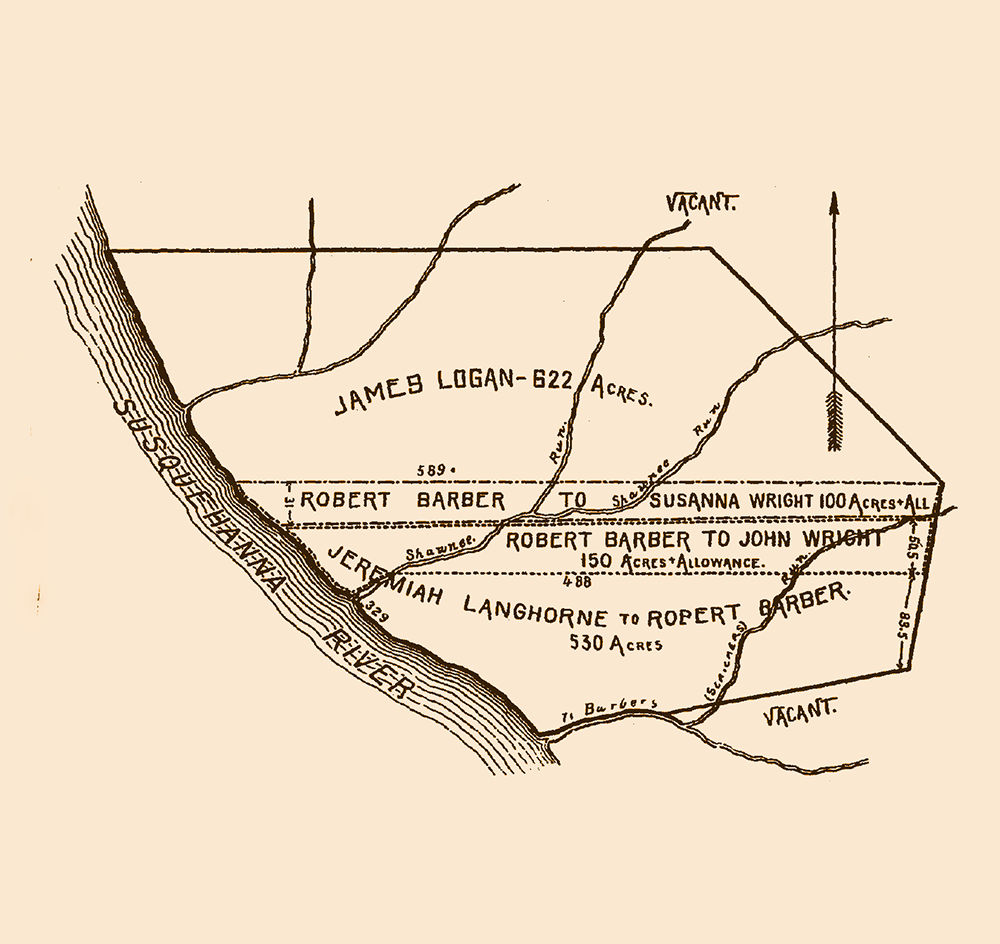
Robert Barber’s land purchases
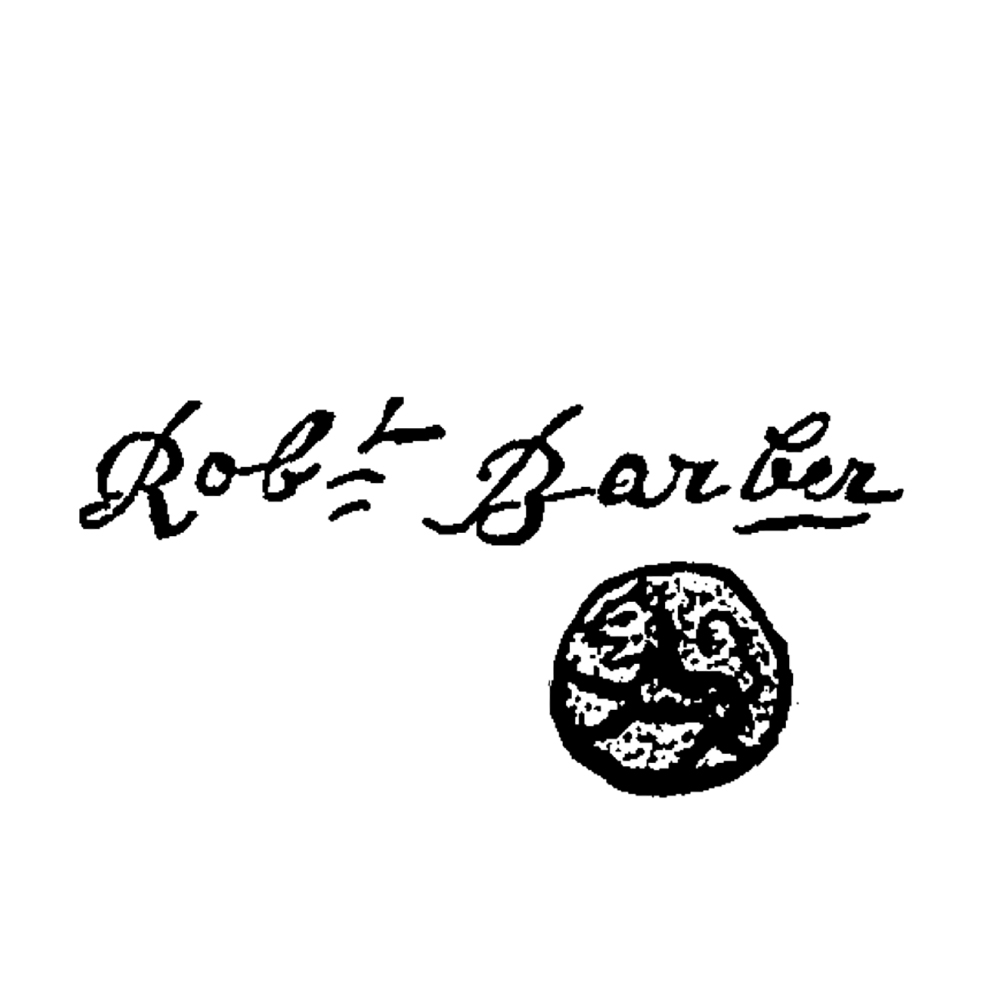
Barber’s signature and official seal